
Types of bookkeeping in Canada
- Arsalan Chugtai
- October 23, 2025
- 3:35 pm
Types of bookkeeping in Canada
- Arsalan Chugtai
- October 23, 2025
- 3:35 pm
Bookkeeping Basics
Bookkeeping is the backbone of every business’s financial health. In Canada, depending on your company’s size, budget, and complexity of operations, bookkeeping generally falls into three main categories. We provide an extensive review of its pros and limitations, as well as some comments on compliance with the Canada Revenue Agency’s (CRA) regulations.

Each system comes with its advantages and limitations—especially when it comes to Canada Revenue Agency (CRA) compliance. Let’s explore each one to help you determine which is right for your business.
Bookkeeping with Single-Entry
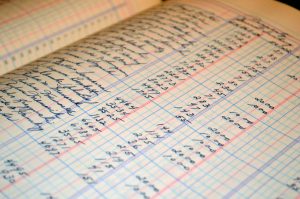
Single-entry bookkeeping is a straightforward accounting approach that only records financial transactions once. To achieve this, you record transactions as single entries in a log, such as a cash book, noting whether they are revenue or expenses. Like a chequebook register, you will record every time money comes in or goes out, including the date, description, and whether it was income or expense. It is often used by sole proprietors, freelancers, and small businesses. Ideal for self-employed individuals, small business owners, and people who do not execute many transactions.
The system is easy to understand and handle logs. It is inexpensive and can be managed with simple spreadsheets. It takes little time to establish and maintain accounting paperwork. However, it is not particularly accurate. Any incorrect entry is tough to identify and track. The system is not suitable for enormous transactions. Furthermore, it does not meet audit or reporting standards for incorporated enterprises and is not CRA-compliant for corporations.
Bookkeeping with Two Entries
Double-entry bookkeeping is an accounting approach in which every financial transaction is documented in at least two accounts with equal and opposite debit and credit entries. The system guarantees a consistent balance between assets and liabilities. Corporations subject to CRA guidelines are required to employ this system, which is the standard accounting method used worldwide.
How does it work?
Assume a company purchases a machine worth $50000 with cash. This purchase will improve corporate assets. Thus, $50,000 is deducted from assets.
The machine acquisition was either financed through a loan or by the owners themselves. That means the cash account has been credited with $50,000.
The major effect is that the total debits ($50000) match the total credits ($50000), and the business’s assets (assets and cash) have changed, but the overall balance remains unchanged.
Benifits
Despite its complexity, there are numerous benefits to employing this method. The main advantage is that it includes integrated error and balance checks. The system covers all financial factors, including assets, liabilities, and equity. The system is meant to be CRA-compliant, which is required for submitting financial statements and corporate taxes, as well as audit- and stakeholder-friendly, making financial analysis and audits easier.
The system is appropriate for businesses with a large workforce, inventory, or several clients, as well as partnerships and organizations.
Summary
The ideal bookkeeping system for your organization is determined by its size, goals, and compliance requirements.
- Single-entry systems are simple and inexpensive.
- When it comes to accuracy and compliance, use double-entry accounting.
No matter which approach you use, excellent bookkeeping keeps your company CRA-compliant, audit-ready, and financially healthy.